As the global space industry rapidly transitions toward constellation-scale missions, the complexity of managing satellite ground operations is increasing just as quickly. Operators today face a fragmented ground segment environment involving multiple ground station networks, different scheduling interfaces, diverse telemetry systems, and increasingly complex mission operations.
Inside Umoja: Simplifying Satellite Ground Operations with One Unified Platform
To address this growing challenge, Remos Space Systems has launched a GSaaS orchestration tool called “Umoja” designed to streamline how satellite operators manage communications with their spacecraft.
The new portal provides a unified digital interface that allows satellite teams to handle scheduling, tracking, telemetry monitoring, and system operations through a single web-based platform supported by modern APIs. The goal is straightforward but significant: simplify ground segment operations while enabling satellite missions to scale efficiently.
The Growing Challenge of Ground Segment Complexity
Satellite missions today rarely rely on a single ground station. Instead, operators typically depend on a mix of infrastructure that may include commercial ground station networks, cloud-based ground segment services, and proprietary stations owned by satellite operators themselves.
While this distributed architecture provides flexibility and global coverage, it also introduces operational complexity. Each network often comes with its own scheduling tools, APIs, operational workflows, and data interfaces. For mission teams operating multiple satellites or managing growing constellations, coordinating these systems can become a major operational bottleneck.
Ground operations teams must ensure that satellite passes are scheduled efficiently, communication links are maintained reliably, telemetry is processed correctly, and mission operations run without interruption. When these tasks are handled across multiple disconnected systems, operational overhead increases significantly.
Recognizing this industry challenge, Remos developed its GSaaS orchestration tool to act as a centralized orchestration layer for satellite ground operations.
A Unified Interface for Mission Operations
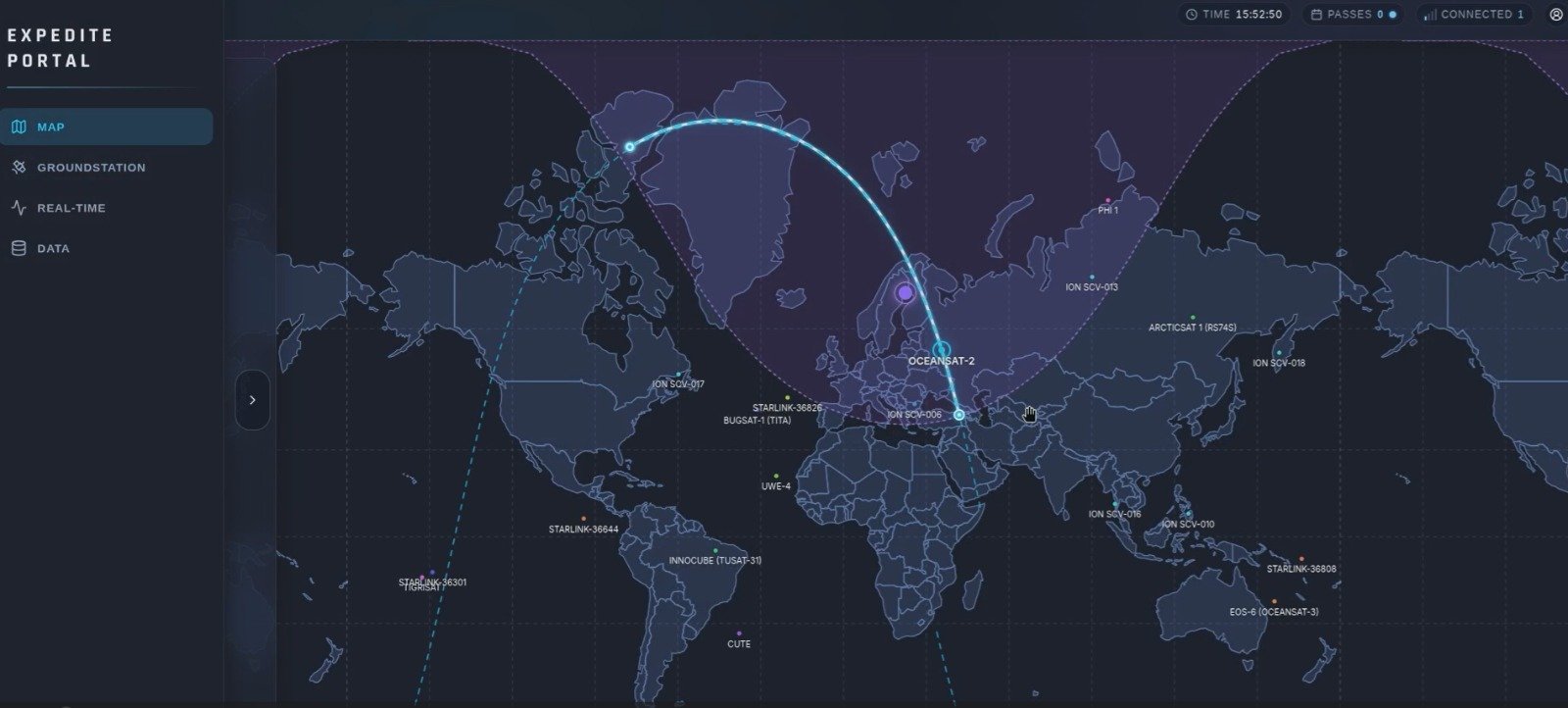
At its core, the Remos’ Umoja tool is designed to provide satellite operators with a single operational environment for managing ground communications.
Through a web-based interface, mission teams can schedule satellite passes, monitor communications sessions, manage telemetry flows, and oversee system operations without switching between different tools or platforms. The portal integrates operational workflows into a streamlined digital dashboard that supports both manual control and automated processes.
Importantly, the platform is built with an API-driven architecture, enabling integration with existing mission control systems, data processing pipelines, and analytics platforms. This allows operators to embed ground segment operations directly into their broader mission infrastructure.
By combining operational visibility with flexible system integration, the portal aims to reduce operational complexity while improving mission reliability.
Watch the full video of Umoja by Remos — The Future of GSaaS Orchestration Explained.
Multi-Network Scheduling Across Global Ground Stations
One of the most critical functions of any satellite mission is efficiently scheduling communications passes with ground stations. As constellations grow, this task becomes increasingly challenging.
The Umoja tool enables seamless scheduling across multiple satellites and ground stations worldwide, allowing operators to coordinate communications sessions through a unified platform.
The system is already compatible with turnkey Remos ground stations, powered by Remos Expedite (TT&C) and Hasten (data) software modem variants. In addition, the Umoja platform is designed with extensibility in mind, enabling integration with other GSaaS networks to support more flexible and scalable ground segment architectures.
This flexibility is particularly important for satellite operators that combine different types of infrastructure to achieve global coverage. By bringing these resources into a single operational interface, the portal helps eliminate the fragmentation that often complicates mission planning.
Designed for Software-Defined Satellite Operations
The launch of Umoja also reflects a broader transformation taking place within the space industry: the shift toward software-defined mission operations.
Satellite missions are increasingly relying on software-driven infrastructure that enables automation, scalability, and rapid deployment. Ground segments are evolving from static hardware installations into flexible, cloud-connected operational systems.
The Remos portal aligns with this transition by providing a software-centric platform that supports automation and integration across mission operations workflows. Instead of relying on isolated tools or manual processes, operators can manage ground communications through a platform designed for modern, data-driven satellite operations.
Integration with Remos Ground Segment Technologies
Umoja is also designed to work natively with Remos’ existing ground segment technologies, including its Expedite software-defined modem and the company’s turnkey ground station systems.
This integration enables satellite operators to deploy complete ground segment solutions that combine hardware infrastructure with digital operational tools. Through the portal, mission teams can configure, manage, and monitor communication sessions while maintaining full visibility into system performance.
By combining software-defined modems, ground station infrastructure, and a centralized operational portal, Remos aims to provide a comprehensive approach to satellite ground segment management.
Enabling Scalable Constellation Operations
As the number of satellites in orbit continues to grow, the ability to manage communications across large fleets is becoming increasingly critical.
Constellation operators must coordinate thousands of satellite passes across global ground networks while ensuring reliable data transmission and efficient use of ground infrastructure. Without advanced scheduling and operational tools, managing these interactions can quickly become overwhelming.
Platforms like Umoja are designed to support this new operational reality. By centralizing ground segment management and enabling automated scheduling and monitoring, the platform helps operators maintain efficiency even as their satellite fleets expand.
This capability is particularly valuable for emerging satellite companies that need to scale their operations rapidly without building large ground operations teams.
A Step Toward the Next Generation of Ground Infrastructure
The launch of Umoja highlights a broader shift taking place within the space industry. While launch capabilities and satellite technologies often capture the spotlight, the ground segment remains the backbone that enables every space mission.
As satellite constellations grow and mission requirements become more complex, the need for flexible, software-driven ground infrastructure is becoming increasingly clear.
By introducing a platform that integrates scheduling, tracking, telemetry management, and system operations into a unified digital environment, Remos Space Systems is contributing to the evolution of the ground segment toward a more connected, automated, and scalable future.
For satellite operators navigating the challenges of modern mission operations, tools that simplify ground segment management may soon become just as essential as the spacecraft themselves.